
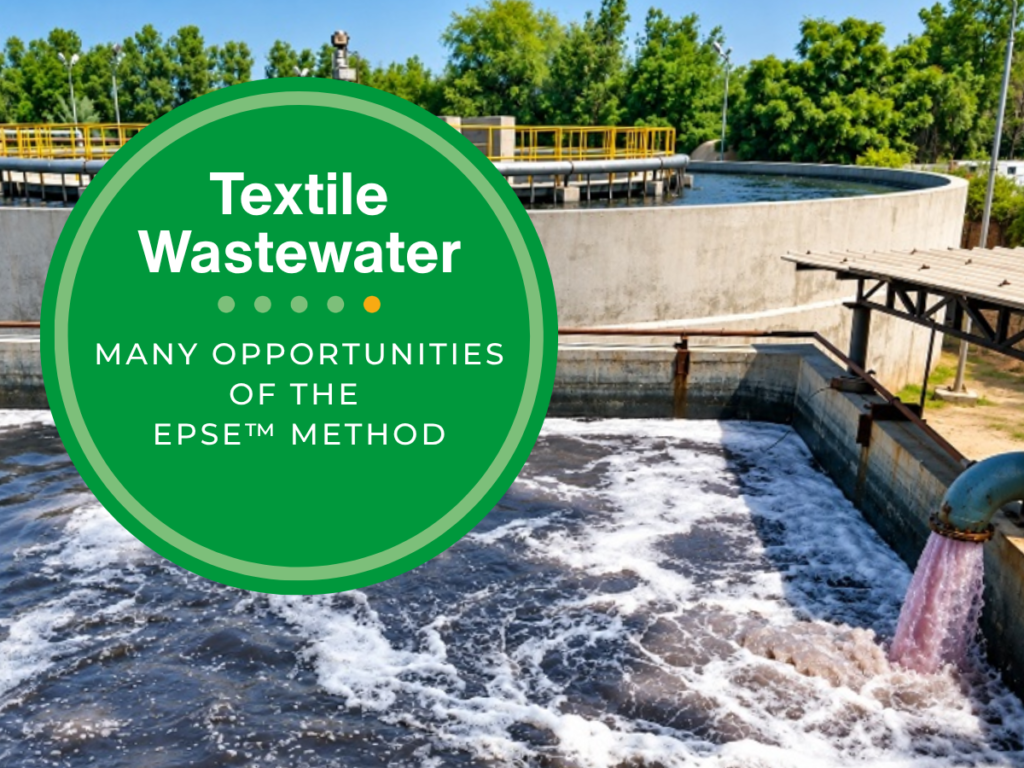
The most obvious application for the EPSE™ Method is in mines: wastewater from the mining industry is typically acidic and contains varying amounts of dissolved heavy metals. However, in addition to mining effluents, our technology has many other applications, some of which may even be surprising. In our new article series, we highlight these various applications where EPSE technology can solve even the most challenging problems. This article focuses on wastewater generated by textile mills.
Photo: Site visit to the wastewater treatment plant of a home-textile mill in Faisalabad, Pakistan. (Shafqat 2023)
Textile Wastewater: From Treatment to Water Reuse
Textile wastewater is a complex effluent generated from multiple wet-processing stages. It is typically characterized by strong color, high total suspended solids (TSS), elevated chemical oxygen demand (COD), high salinity or total dissolved solids (TDS), and often alkaline pH. Its composition varies depending on factors such as the type of textile processed, whether cotton or synthetic, the dye class, and the chemicals used. Major wastewater sources include sizing and desizing, dye-bath discharge, washing and rinsing, as well as printing and finishing operations.
Wastewater generation can reach around 119 liters per kilogram of textile processed
Textile mill wastewater is generated mainly during processing steps such as dyeing, washing, rinsing, bleaching, and finishing. These processes can consume substantial amounts of water. Based on measured data from textile factories, average wastewater generation can reach around 119 liters per kilogram of textile processed. For an 180 g T-shirt, this would correspond to roughly 21 liters of wastewater, although the actual amount varies depending on the process, equipment, and production practices at the mill (Uddin et al., 2023).
This also highlights an important opportunity. Much of the water used in wet processing eventually leaves the process as wastewater, meaning that effective treatment and reuse can significantly reduce freshwater demand. A range of technologies are already used for textile wastewater treatment, including biological treatment, coagulation and flocculation, and membrane processes such as ultrafiltration, nanofiltration, and reverse osmosis. In practice, these technologies are often combined to achieve the water quality required for reuse in washing, dyeing, and other textile processes.
EPSE Treatment of Textile Wastewater
Textile wastewater can contain metals originating from dyes, pigments and other process chemicals. Metals such as chromium (Cr), copper (Cu), cobalt (Co), zinc (Zn) and iron (Fe) can be present at mg/L levels depending on the type of dyes used in the process. Suspended solids are another important concern, and TSS can reach several hundred mg/L. Both metals and suspended solids need to be reduced before discharge and, especially, before water reuse, as they can contribute to fouling, scaling and reduced performance in downstream RO systems.
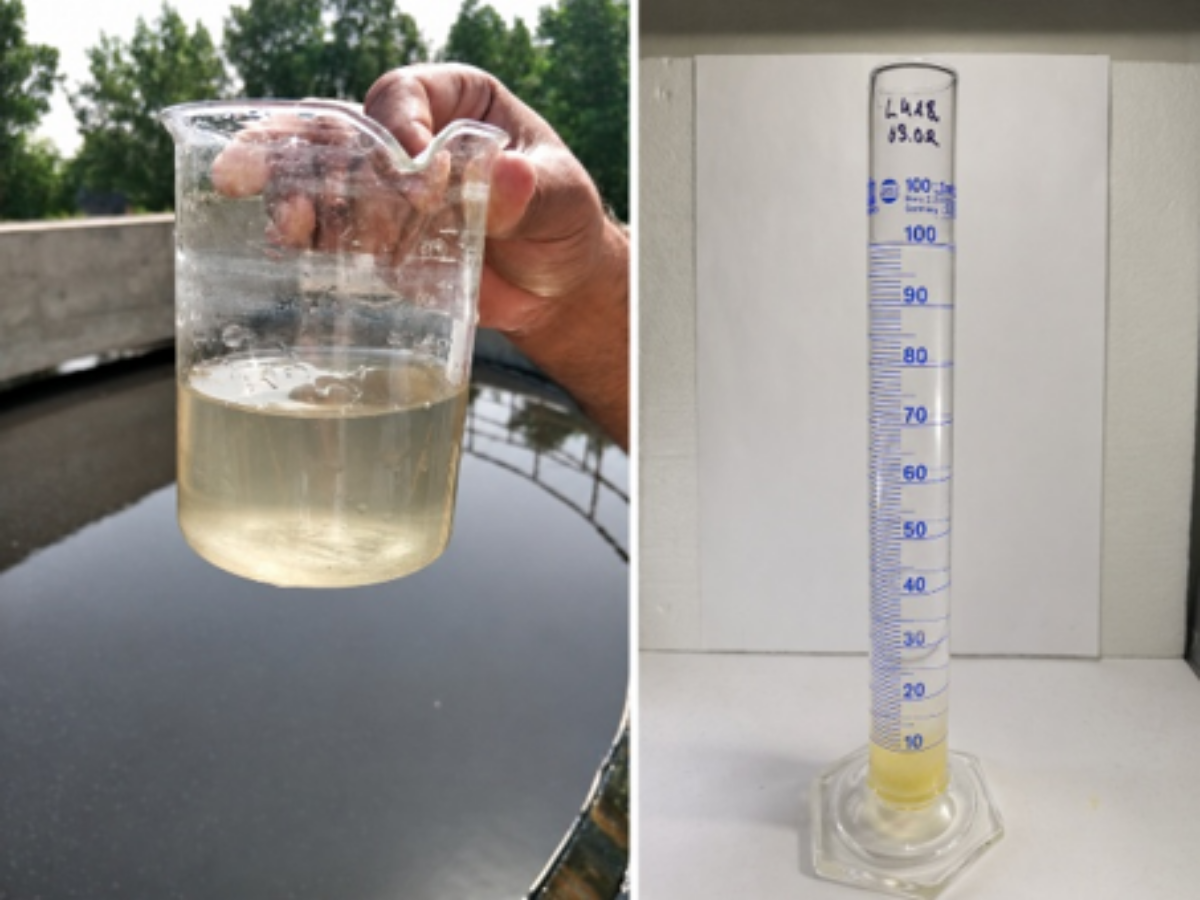
The EPSE treatment can be used to precipitate and remove metals together with suspended solids, producing a cleaner water stream for either discharge or further treatment to achieve the water quality required for reuse.
Interested in our solutions?
This article was written by

Khawer Shafqat
Solution Manager, M.Sc. (Tech) Env. Eng
khawer.shafqat(a)epse.fi
Follow EPSE in social media!


Reference:
[1] Uddin, M. A. et al. 2023. Water and chemical consumption in the textile processing industry of Bangladesh. PLOS Sustainability and Transformation, 2(7), e0000072.