
Occupational safety begins with identifying risks, preventing them from occurring, and preparing for hazardous situations. An occupational safety and health action plan identifies hazards specific to the workplace and its environment, assesses the associated risks, and outlines corrective measures, their monitoring, and performance metrics. Simply identifying risks and discussing them increases safety awareness. The safety culture is strengthened in particular by involving employees in the planning of measures and by their determined implementation, and when resources are limited, it is important to allocate them to measures that have a real impact.
First Aid Preparedness as Part of Occupational Safety
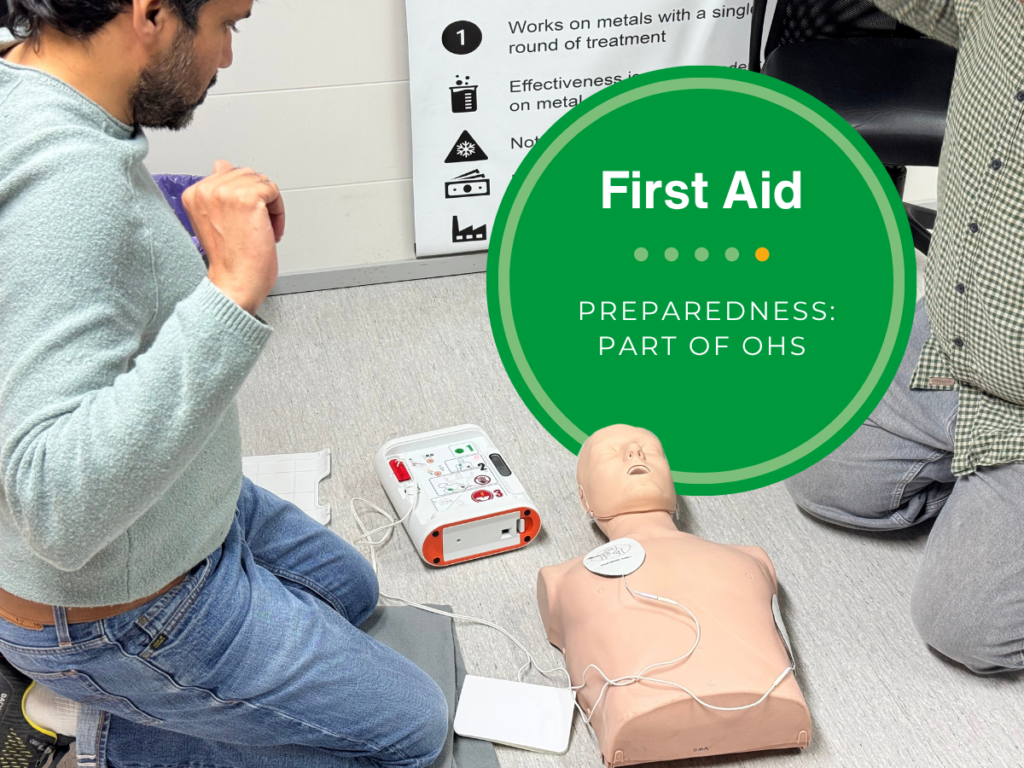
Occupational safety and health management is required by law, and first aid preparedness is part of it. First aid preparedness consists of adequate first aid skills, equipment, and procedures and plans for responding to accidents. The goal of first aid training is to strengthen practical first aid skills, prevent accidents, and improve the ability to identify and manage risks, and the content of the training must be tailored to the specific requirements of the job (Finnish Occupational Safety and Health Administration, 2025). Specific risks identified in EPSE’s work include, for example, chemical exposure and traffic accidents related to fieldwork, which is why the first-aid training held on September 18 included practice in, among other things, procedures for treating poisonings, chemical exposure to eyes and skin, and providing first aid in the event of a car accident, as well as turning a person with a spinal cord injury into the side-lying position. The training is a practical way to maintain operational readiness and incorporate company-specific risks into safety discussions.
Decision-making should be based on data, but without neglecting people’s experiences.
Operations in Light of Statistics and Data
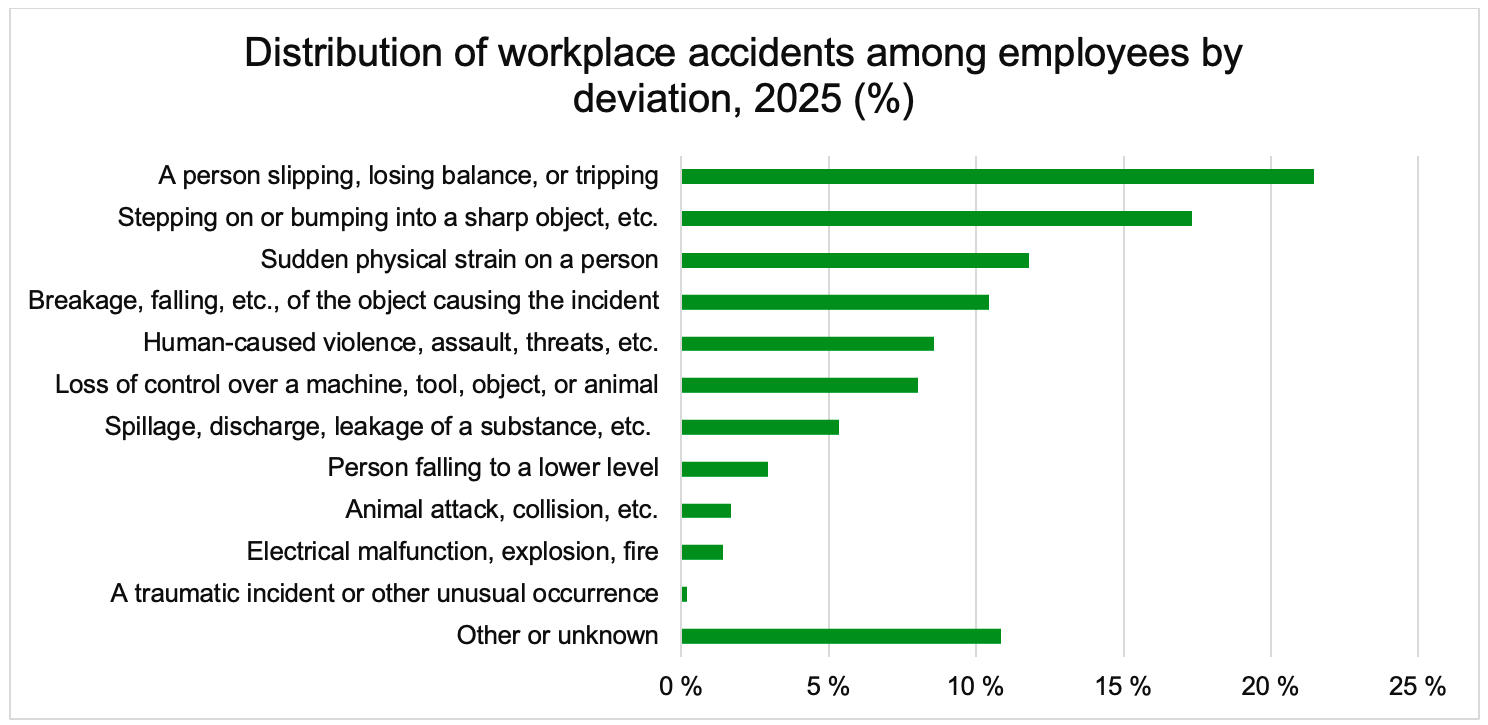
In 2025, the most common workplace accidents among employees were various types of falls. Slips were likely particularly prevalent in commuting accidents: 56% of commuting accidents occurred among pedestrians (Työtapaturmatieto, 2026). Accidents caused by sharp objects were also common. This underscores the importance of training in first aid for head injuries and wound care, for example. However, standardized first-aid courses do not eliminate the need for workplace-specific preparedness. Workplaces and employees must identify the likely risks associated with their work and prepare for them with appropriate equipment and procedures. Today, there are many different and award-winning applications and tools developed for safety observations and near-miss reporting, and the data collected from them often sends decision-makers subtle—or sometimes quite loud—signals about safety. Decision-making should be based on data, but without neglecting people’s experiences. When observations are genuinely meaningful and the feedback loop functions effectively, safety culture is also strengthened.
Accidents Happen in Industry
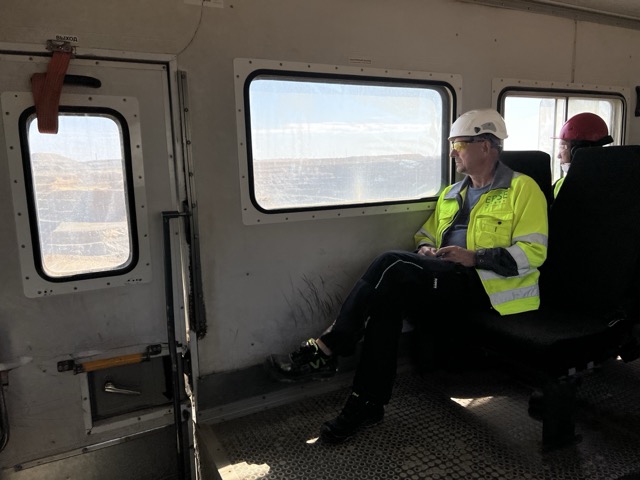
Industry is heavily represented in both domestic and international accident statistics. In 2022, 29.9% of non-fatal workplace accidents in the EU occurred in industrial facilities, and 9.5% occurred at construction sites, open-pit mines, or quarries (Eurostat, 2024). In addition, 18.3% of accidents occurred at a temporary or mobile workstation or while traveling on behalf of the employer. However, the location of the incident was unknown in 25.5% of cases, which makes it difficult to form a comprehensive picture of accidents occurring in mobile and project-based work (Eurostat, 2024; Honkonen, 2025). In developing workplace safety, it is therefore important to also take into account changing and non-traditional work environments, as well as the reporting of accidents and incidents in those settings. First aid skills are universal in this sense: the basic skills remain the same, even as the work environment and workplace-specific guidelines change.
Gender Matters, Too
Gender cannot be ignored when it comes to workplace accidents and safety. In 2023, about two out of three (67.6%) non-fatal workplace accidents in the EU involved men. These differences are influenced, among other factors, by the distribution of men and women across different sectors and job roles, as well as by the prevalence of full-time versus part-time work (Eurostat, 2026). Attitudes and behavioral patterns cannot be measured reliably or in a standardized manner, so their impact can only be speculated upon. Of course, in the mining, manufacturing, and construction sectors—where men are still in the majority—more accidents occur. First aid training, too, should always take the gender perspective into account: for example, women are more likely than men to go without life-saving CPR because the rescuer may hesitate to expose a woman’s chest. In addition, there may be significant gender differences in the symptoms of a heart attack, for example. Clear instructions that take the gender perspective into account, along with hands-on practice, help people act effectively even in stressful situations.
In 2023, about two out of three (67.6%) non-fatal workplace accidents in the EU involved men.
First aid training is, in fact, more than just a legal requirement: it is part of the workplace’s safety culture. The paradox of First Aid training is that, in real life, everyone hopes they will never have to use the skills they learned in first aid courses—or have to reflect on any accident in the spirit of continuous improvement.
This article was written by

Anni Honkonen
EHSQ Manager
anni.honkonen(a)epse.fi
Follow EPSE in social media!


References
Eurostat. (2024). Accidents at work statistics. Accessed 4 December 2024. Available online: https://ec.europa.eu/eurostat/statistics-explained/index.php?title=Accidents_at_work_statistics
Eurostat. (2026). Accidents at work statistics. Statistics Explained. Accessed 21 September 2026. Available online: https://ec.europa.eu/eurostat/statistics-explained/index.php?title=Accidents_at_work_statistics
Finnish Occupational Safety and Health Administration. (3 October 2025). First aid preparedness. Accessed 21 September 2026. Available online: https://tyosuojelu.fi/tyoterveys-ja-tapaturmat/ensiapuvalmius
Honkonen, A. (2025). Safety management problems and solutions in complex industrial projects. Master’s Thesis. Tampere University, Faculty of Management and Business.
Työtapaturmatieto. (9 March 2026). The number of commuting accidents decreased in 2025, while the frequency rate of workplace accidents remained unchanged. Accessed 21 September 2026. Available online: https://www.tyotapaturmatieto.fi/julkaisu/tyotapaturmatietopalvelu/4088