
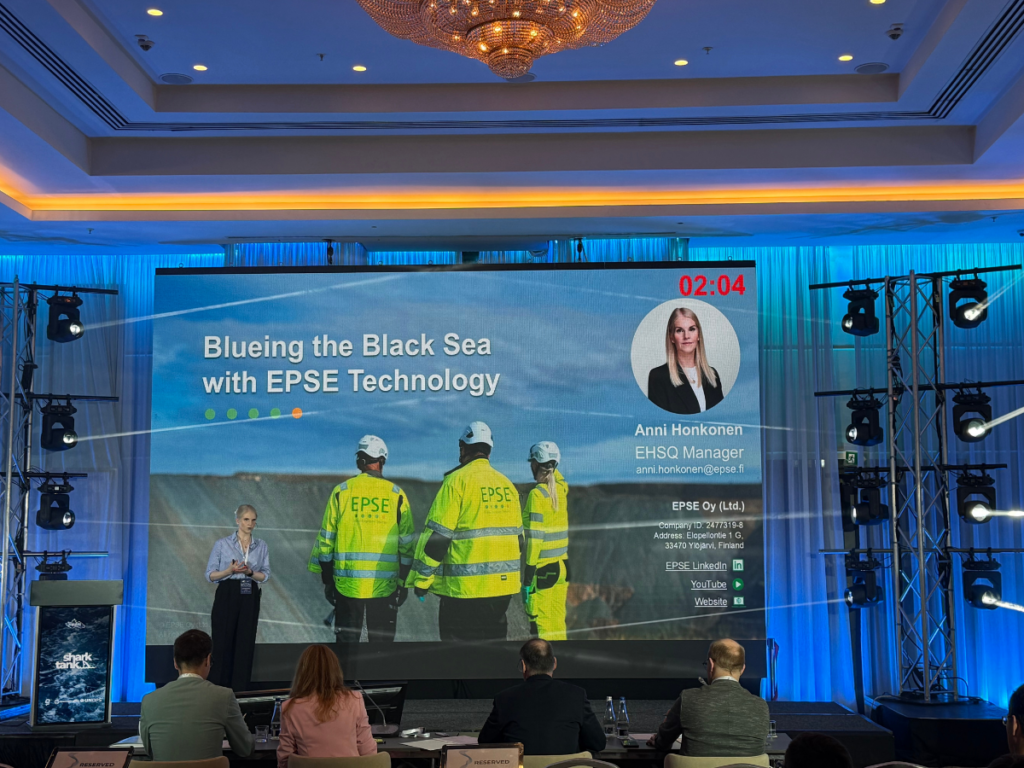
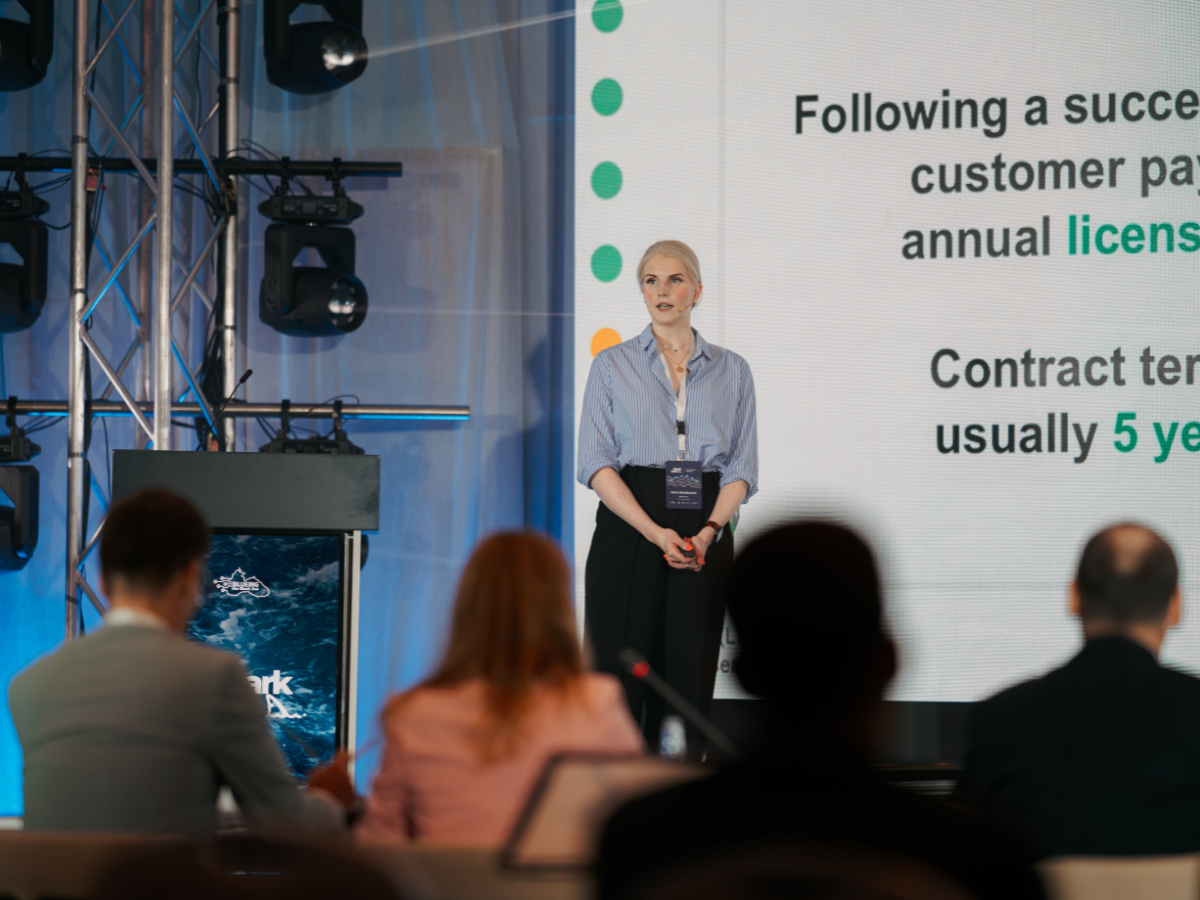
EPSE participated Eco-Innovation Challenge and made it all the way to the Shark Tank final, in which EHSQ Manager Anni Honkonen pitched EPSE’s project to a four-member jury (i.e., the sharks that were in reality closer to dolphins) as well as to an audience of a hundred people. Unfortunately, there were others whose projects were a better fit for the challenge’s objectives and who had a more established local partner network, so this time EPSE didn’t make the cut. It was a fun experience, and it was Honkonen’s first-ever pitch on Shark Tank event with a three minute timeline, one which gave her a great deal of confidence in public speaking and provided her with wonderful connections to smart and determined entrepreneurs, inventors, and leaders.
What Eco-Innovation Challenge?
The Eco-Innovation Challenge (EIC) is part of the GEF-funded Blueing the Black Sea (BBSEA) Project, executed by UNOPS on behalf of the World Bank. Its goal is to accelerate innovative solutions for reducing pollution in the Black Sea region. The challenge was created in response to growing environmental threats such as industrial pollution, untreated wastewater, agricultural runoff, and marine litter, which have severely impacted one of Europe’s most polluted seas.
Launch in December 2025
The process began with an open international call for applications from startups, companies, universities, NGOs, researchers, and innovators, with a deadline in December 2025. Applicants submitted solutions aimed at improving water quality, reducing pollution, or supporting a sustainable blue economy. Those who submitted are either those who are a bit further along in the startup world (Focus Country Window or FCW) or are still in the concept or idea phase (Greater Black Sea Window or GBSW). Out of 186 initial applications, 27 selected semi-finalists for FCW and 23 for GBSW participated in mentoring programs, technical bootcamp in Istanbul, and expert guidance sessions to refine their concepts and prepare scalable implementation plans. Depending on the maturity of the solution, participants may receive either technical assistance or grant funding to pilot and expand their innovations in the Black Sea region. Out of these 50 semi-finalists, 16 for the FCW and 11 for the GBSW were further selected to participate in a final, which was a Shark Tank styled pitching event that was held in Moldova on 10th June 2026.
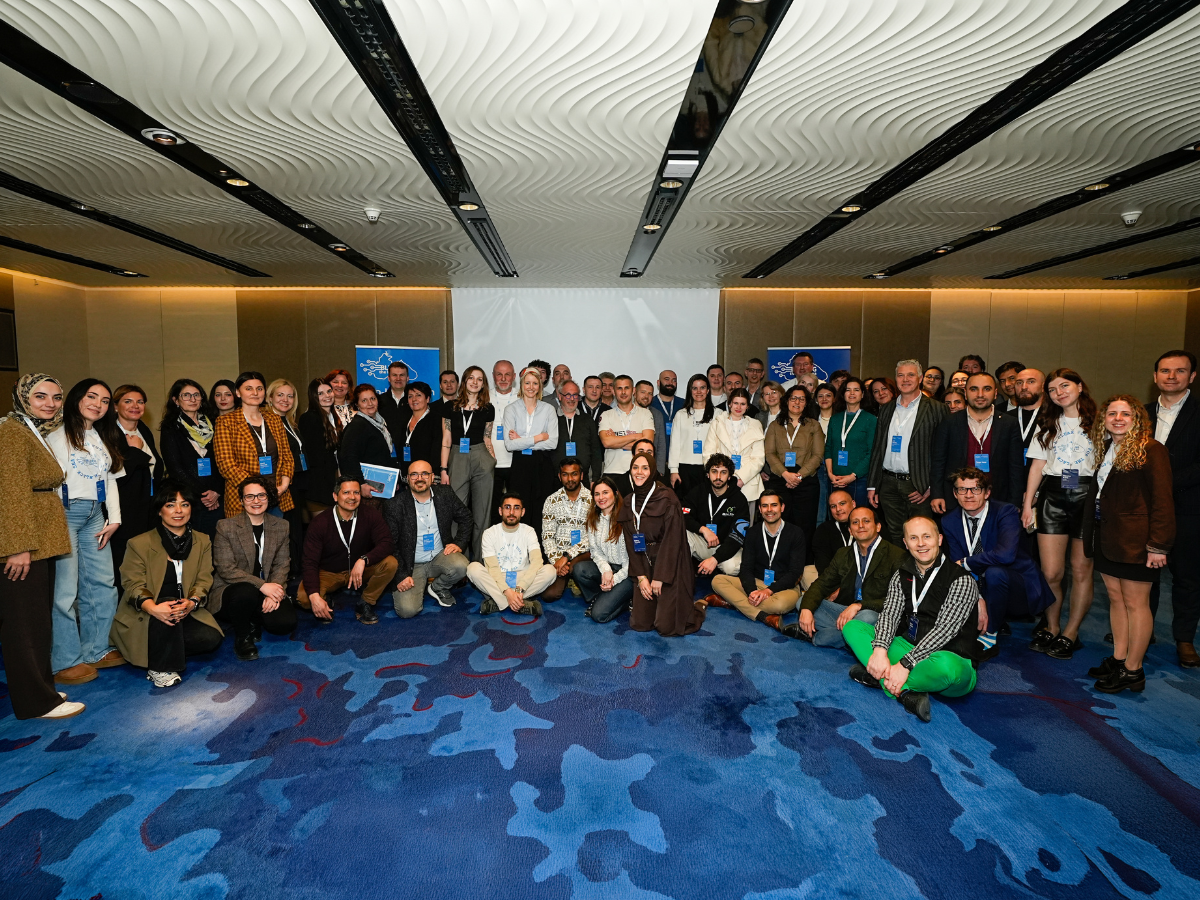
The implementation of the winning projects—that is, the launch of the projects that won the Shark Tank event and received grants, and in some cases, mentoring—will begin in August 2026 following the due diligence phase, making sure all teams and projects follow UNOPS and World Bank principles and ethical rules.
Goals of the project(s)
You can find all the finalist projects for FCW and GBSW on UNOPS’ website. The overall goal of BBSEA is to connect innovation, science, and entrepreneurship to practical environmental action, while strengthening regional cooperation and supporting long-term ecological and economic recovery of the Black Sea. EPSE congratulates all the winners and looks forward to seeing what they will accomplish to improve the state of the Black Sea!
This article was written by

Anni Honkonen
EHSQ Manager
anni.honkonen(a)epse.fi
Follow EPSE in social media!


