

In industry, measurement data drives decision-making. Processes are adjusted based on analytical results, chemical dosing is optimized according to numerical values, and environmental impacts are assessed through measurements. The underlying assumption is that measurement data reflects reality. In practice, however, this is not always the case. These challenges are widespread in industry and are not the result of individual errors, but rather inherent to the nature of the processes.
The composition of industrial wastewater varies significantly depending on the process and raw materials used, making reliable characterization and process design challenging (Azanaw et al. 2022). A measurement may be technically correct, yet still operationally misleading. In industry, decisions are constantly made based on data that is technically accurate but incorrect from a process perspective.
Sampling Determines the Result
The importance of sampling is particularly emphasized in dynamic systems where load and flow conditions fluctuate. A single grab sample may deviate significantly from the process average, resulting in an analysis that is technically correct but operationally misleading.
Industrial wastewater has been shown to vary significantly over time and in composition, making it difficult to obtain representative samples (Keane et al. 2026). Therefore, continuous or regular monitoring provides a more reliable picture of process performance than single measurements.
Without trend analysis, a single data point can lead to incorrect conclusions, such as over- or under-dosing of chemicals. This is directly reflected in increased costs and environmental impacts. Optimization of process parameters has been shown to significantly improve treatment performance without increasing chemical consumption, highlighting the importance of reliable data (Costa et al. 2020; Rajabi 2025).
Spatial variability also plays a role: insufficient mixing, settling of solids, or incorrect sampling locations can lead to non-representative samples. This is particularly relevant in multiphase systems. Ensuring representative sampling requires clearly defined sampling locations, timing, and methods, as well as proper sample handling practices (ISO 5667-1:2023).
Sample Handling Alters What Is Being Measured
Sampling is not the only critical step. Sample handling also directly affects the analytical result. Filtration, acid preservation, and delays before analysis can significantly alter sample composition. For example, acidification may dissolve metals bound to solids, meaning the analysis no longer reflects the original dissolved fraction.
Controlling these effects is a key part of reliable analysis (ISO 5667-3:2018). The critical question is not only whether the laboratory can measure concentrations accurately, but whether the correct parameter is being measured. Without proper interpretation in the context of the process, measurement data cannot be reliably used for process control. This requires clearly defined procedures for sample handling and analysis to ensure comparability and reliability of results.
Laboratory Conditions Do Not Reflect Process Reality
Laboratory tests are conducted under controlled conditions, whereas in real processes, flow conditions, mixing, and residence times continuously influence the outcome. These conditions cannot be fully replicated in the laboratory.
As a result, laboratory results do not always scale directly to industrial processes. This is particularly evident in chemical precipitation, where reactions are highly sensitive to local conditions. Results optimized in the laboratory must always be verified under real operating conditions. Effective use of laboratory data also requires an understanding of both analytical methods and their limitations.
Design Is Often Based on Non-Representative Data
When measurement data does not reflect reality, the error carries directly into process design. Wastewater treatment systems are dimensioned based on analytical data, and if this data does not represent actual loading conditions, the design will fail in practice. In addition, design is often based on average values, even though extreme values and fluctuations are critical for process performance. This makes systems vulnerable to disturbances.
The situation is further complicated by the fact that many treatment plants or processes were designed years or even decades ago. Since then, loading conditions, processes, and discharge requirements may have changed significantly, meaning that the original design criteria no longer reflect reality. This mismatch between design and actual conditions has been identified as a key reason for performance issues in wastewater treatment systems (WaterAid 2021). In many cases, however, performance can be significantly improved by optimizing existing processes without major capital investments (El-Sheikh 2011). This requires solutions that can be adapted to existing processes and infrastructure without significant modifications.
Practical Consequences
When data does not reflect reality:
- processes are incorrectly adjusted
- chemicals are over- or under-dosed
- performance falls below target levels
- environmental impacts are misjudged
Without a comprehensive understanding of the system, operations may fall into a continuous corrective mode, even when the fundamental solution already exists. From an economic perspective, this leads to increased operational costs, excessive chemical consumption, and higher treatment costs. Poor data is therefore not only a technical issue, but a direct cost driver.
Towards More Reliable Process Control
Effective process control is not based on a single measurement, but on a system where sampling, analysis, and interpretation form a coherent chain. If any of these steps fail to represent process reality, the outcome cannot be reliable.
Continuous monitoring and trend analysis enables a better understanding of process behavior. Optimal operation requires up-to-date information on wastewater characteristics (Andreides et al. 2022). In practice, reliable process control requires the integration of analytical data, sampling, and process understanding. When these are aligned, decisions based on misleading data can be avoided. At EPSE, this is achieved through close collaboration between experts across multiple disciplines in process design and implementation.
Conclusion
A reliable process starts with reliable data. In industrial wastewater treatment, the key is not only the ability to measure, but to measure the right parameters in the right way and to understand what the results actually represent.
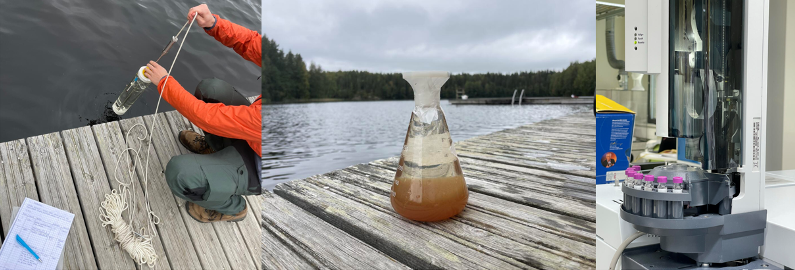
FIGURE 1. Regardless of the environment, measurement data always follows the same sequence: sampling, sample preparation, analysis, and interpretation of results. (PHOTO: Anette Anttonen)
This article was written by:

Anette Anttonen
Laboratory Engineer
anette.anttonen(a)epse.fi
Follow EPSE in social media!


References listed in order of appearance
Azanaw, A., Birlie, B., Teshome, B. & Jemberie, M. (2022) Textile effluent treatment methods and eco-friendly resolution of textile wastewater. Case Studies in Chemical and Environmental Engineering, 6, 100230. https://doi.org/10.1016/j.cscee.2022.100230. Accessed 15.4.2026.
Keane, C.A., Verhagen, R., Mueller, J.F., O’Brien, J.W., Shiels, R. & Li, J. (2026) Chemical profiling of industry wastewaters to identify industry sources of contaminants. Water Research. Volume 295. https://doi.org/10.1016/j.watres.2026.125575. Accessed 14.4.2026.
Costa, E.P., Starling Maria Clara, V.M. & Amorim, C.C. (2021). ”Simultaneous removal of emerging contaminants and disinfection for municipal wastewater treatment plant effluent quality improvement: a systemic analysis of the literature”, Environmental Science and Pollution Research, vol. 28, no. 19, pp. 24092-24111. Access restricted. https://doi.org/10.1007/s11356-021-12363-5. Accessed 15.4.2026.
Rajabi, S., Ahmadian, F., Maleky, S. & Hashemi, H. (2025). Chemical coagulation/flocculation process in organic load reduction of machining oily effluent (Z1): RSM-CCD optimization. Appl Water Sci 15, 252.https://doi.org/10.1007/s13201-025-02608-w. Accessed 15.4.2026.
ISO 5667-1:2023. Water quality. Sampling. Part 1: Guidance on the design of sampling programmes and sampling techniques.
ISO 5667-3:2018. Water quality. Sampling. Part 3: Preservation and handling of water samples.
WaterAid. (2019) Functionality of wastewater treatment plants in low- and middleincome countries. Desk review. London: WaterAid. https://washmatters.wateraid.org/publications/functionality-wastewater-treatment-plants-low-middle-income-countries Accessed 14.4.2026.
El-Sheikh M. A. (2011). Optimization and upgrading wastewater treatment plants. Journal of Engineering Sciences, Vol. 39, No. 4, pp. 697-713. https://doi.org/10.21608/jesaun.2011.127692. Accessed 15.4.2026.
Andreides M., Dolejš, P. & Bartáček, J. (2022). The prediction of WWTP influent characteristics: Good practices and challenges, Journal of Water Process Engineering, Volume 49. https://doi.org/10.1016/j.jwpe.2022.103009. Accessed 15.4.2026.