
- Customer: Peittaus Nikander Oy
- Location: Masku, Finland
- Industry: Metal industry / Surface treatment
- Experience with the EPSE™ Method: Over 8 years
- Treatment capacity: 7–8 m³/day
- Key benefits: Reliable, low-maintenance operation, effective heavy metal removal, and consistent compliance with environmental permit requirements
Reliable Wastewater Treatment Supporting Responsible Production
Peittaus Nikander Oy is a Finnish company based in Masku, specializing in the surface treatment of stainless and acid-resistant steel. The company provides immersion and spray pickling services as well as passivation, and its acid pickling facility has been operating since 2017.
Acid pickling removes impurities and a thin layer of metal from the steel surface through chemical treatment. This process improves the corrosion resistance of the steel and ensures a uniform surface finish. Environmental responsibility and safety are central to the facility’s operations.
Above all, wastewater treatment must be reliable, easy to maintain, and capable of delivering consistently high treatment performance. To meet these requirements, the company selected the EPSE™ Method, which precipitates metals from wastewater and reliably achieves the treatment standards specified in the facility’s environmental permit.
Wastewater Treatment in Practice
Acidic rinse waters are first directed into an equalization tank before entering the EPSE treatment process. EPSE 1010 chemical is dosed into the wastewater, after which the pH is raised using sodium hydroxide (NaOH) to precipitate dissolved metals.
The resulting sludge is then separated from the water using a filter press, producing treated water as filtrate. The process does not require a separate sedimentation tank, as the precipitated solids can be removed directly using the filter press.
The acidic wastewater contains several heavy metals, including nickel and chromium. The facility treats approximately 7–8 cubic metres of wastewater per day.
The quality of the treated wastewater is regularly monitored through laboratory analyses. Samples are tested for heavy metals, particularly cadmium, chromium, copper, lead, nickel, and zinc, as well as parameters such as fluoride, chloride, pH, electrical conductivity, and suspended solids.
The monitoring programme also includes parameters indicating organic load and nutrient concentrations, such as chemical oxygen demand (COD), biochemical oxygen demand (BOD), nitrogen, and phosphorus.
Reliable Operation and Consistently Monitored Treatment Performance
The EPSE™ Method has delivered excellent treatment results, but the reliability of the process has proven to be an equally important benefit.
The treatment system operates with minimal maintenance and straightforward adjustments, and no significant operational issues have occurred throughout its years of service.
The treatment performance is monitored by the regulatory authority through quarterly sampling, and no exceedances of the permitted discharge limits have been reported.
“The system has worked well.”
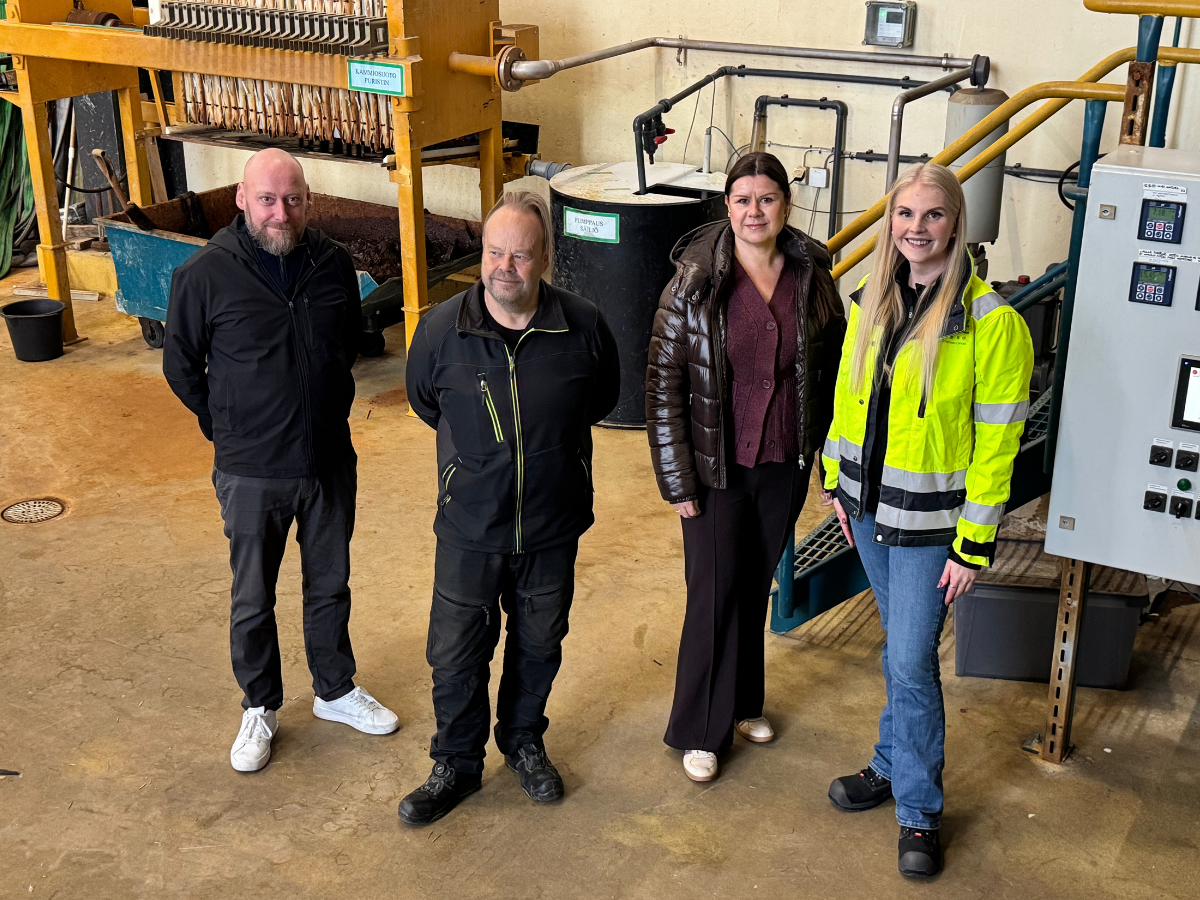
This is how Mikko Nikander, Managing Director of Peittaus Nikander Oy, summarizes seven years of operating experience. He presented the facility to EPSE’s visitors together with Marjaana Anttonen and Mauri Peippo.
This article was written by

Anni Honkonen
EHSQ Manager
anni.honkonen(a)epse.fi
Follow EPSE in social media!


