
The effect of the base on the course of precipitation
In chemical precipitation, pH adjustment is often viewed as a simple technical step. In practice, however, the outcome of precipitation is not determined solely by the pH value, but rather by how the pH is achieved and the chemical environment in which the reactions take place.
The composition of industrial wastewater varies significantly, which alters the course of precipitation reactions and thus also the optimal choice of base. The same pH or base used does not lead to the same outcome in different wastewater streams.
The choice of base simultaneously affects the reaction rate, supersaturation, and the type of solid phase that forms (Lewis 2017; Schikarski et al. 2022; Furcas et al. 2024). Sodium hydroxide raises the pH rapidly, calcium hydroxide dissolves to a limited extent and reacts more slowly, and magnesium hydroxide acts more like a buffer. These differences are directly reflected in the course of precipitation. For example, a rapid rise in pH can cause local spikes before mixing, leading to the formation of fine-grained sludge, whereas a slower reaction can produce coarser solids that settle more effectively (Lewis 2017).
The ions introduced with the base are not inert
The ions entering the solution with the base also have a significant effect on the entire system (Fu & Wang 2011). Sodium generally does not participate directly in precipitation reactions, whereas calcium and magnesium may participate. The accompanying ions affect the amount and structure of the sludge as well as the equilibrium of the entire chemical system. Furthermore, the ionic strength and ionic composition of the solution govern the chemical equilibrium and precipitation reactions (Benjamin 2002, 25–27; Lin et al. 2005).
At the same time, the choice of base affects the amount of dissolved salts. In practice, chemical treatments often aim to utilize the major ions already present in the wastewater, thereby avoiding the unnecessary introduction of new ionic components into the system. For example, the use of sodium hydroxide increases Na+ ions, which typically remain in the water and increase conductivity. High salt concentration can limit water recyclability and increase the need for further treatment (Lv et al. 2024).
Removing metals alone is not sufficient if it simultaneously increases the salt load. In practice, this can manifest as a decline in recycled water quality, increased corrosion, and the formation of deposits.
In practice, the choice is a compromise
In practice, however, the choice of base is not based solely on chemistry. The chemically best solution is not always the best in practice; rather, the choice is made based on the overall picture. In industry, lime is often the primary choice due to its low price, good availability, and suitability (EPA 2000; Fu & Wang 2011). In some cases, the optimal solution is not a single base but a combination of them. Multi-stage solutions are used only when there is a clear chemical rationale and process benefit.
On an industrial scale, the importance of base selection is emphasized when considering the entire material flow rather than just water treatment. In such an environment, the choice of base directly affects whether the system’s overall load is increased. The choice affects not only the amount and quality of the sludge produced, but also whether metals can be recovered or water efficiently recycled back into the process. Base selection is therefore not merely a matter of chemical optimization, but part of managing the material cycle of the entire process.
Calculations are not enough; experimental data is needed
The phenomena described above cannot be reliably predicted based on calculations alone. A complex matrix, buffer systems, and simultaneous reactions influence how much of each base is actually required. For this reason, chemical consumption and process performance must be verified experimentally. (Barakat 2010; Fu & Wang 2011; Benalia et al. 2021; EPA 2000).
In the EPSE Lab PoC process, base selection is based on measured data and experimental observations. Formulation development begins with sample analysis, followed by testing the performance of the current base and comparing alternatives if necessary. Often, the starting point is a base the client is already using, most typically lime. The goal is not to change the process unnecessarily, but to ensure that the selected solution matches the actual chemistry of the wastewater and the client’s objectives.
The goal is not to change the process unnecessarily, but to ensure that the selected solution matches the actual chemistry of the wastewater and the client’s objectives.
Laboratory studies often reveal that a multiple of the actual required amount of base is being added. For example, excess lime increases chemical costs, increases sludge volume, impairs pH control, and complicates process management. Additionally, equipment wear and maintenance needs increase, which reduces the process’s cost-effectiveness and environmental friendliness. When treatment conditions are optimized, alkali consumption can be significantly reduced while improving process controllability and the consistency of the final product.
Finally
The choice of base is also influenced by what is to be done with the solid phase formed during wastewater treatment. If the sludge is treated as waste, its volume, treatability, solubility, and separability become key considerations. The sludge formed in the EPSE™ process typically meets the criteria for non-hazardous waste, which allows for its safe final disposal, for example, in a landfill based on solubility testing in accordance with standard EN 12457-2.
If the goal is metal recovery, the composition, purity, and structure of the sludge are decisive factors.
The choice of base is not a single technical decision, but part of a holistic approach that combines chemistry, practical constraints, and objectives. The best solutions do not arise from assumptions or idealized calculations, but from measured data, experimental work, and an understanding of the big picture.
Read more about the properties and evaluation of EPSE sludge, and the possibilities for metal recovery!
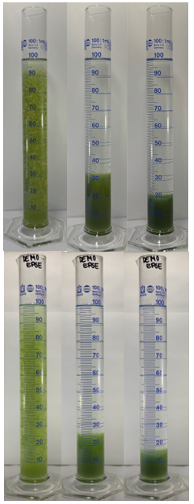
The same pH level in the same fraction, achieved with different bases, can result in very different precipitation and settling patterns. In the figure, the pH of the EPSE-treated samples was adjusted using either NaOH (top row) or Ca(OH)₂ (bottom row), and the sedimentation of the sludge is shown at 1.5 and 15 minutes.
This article is written by

Anette Anttonen
Laboratory Engineer
anette.anttonen(a)epse.fi
Follow EPSE in social media!


References in order of appearance:
Lewis, A. (2017). Precipitation of Heavy Metals. In: Rene, E., Sahinkaya, E., Lewis, A., Lens, P. (eds) Sustainable Heavy Metal Remediation. Environmental Chemistry for a Sustainable World. Volume 8. Springer, Cham. Access restricted. https://doi-org.libproxy.tuni.fi/10.1007/978-3-319-58622-9_4 Accessed 10.4.2026 Accessed 10.4.2026
Schikarski, T., Avila, M., Trzenschiok, H., Güldenpfennig, A. & Peukert, W. (2022) Quantitative modeling of precipitation processes. Chemical Engineering Journal. Volume 444. Access restricted. https://doi.org/10.1016/j.cej.2022.136195. Accessed 10.4.2026.
Furcas, F.E., Mundra, S., Lothenbach, B. & Angst, U. (2024). Speciation Controls the Kinetics of Iron Hydroxide Precipitation and Transformation at Alkaline pH. Environmental Science & Technology, 58(44). https://doi.org/10.1021/acs.est.4c06818. Accessed 10.4.2026
Fu, F. & Wang, Q. (2011). Removal of heavy metal ions from wastewaters: A review, Journal of Environmental Management 92 (3). Access restricted. https://doi.org/10.1016/j.jenvman.2010.11.011 Accessed 10.4.2026
Benjamin, M.M. (2002). Water Chemistry. McGraw-Hill Series in Water Resources and Environmental Engineering. Boston: McGraw-Hill.
EPA (Environmental Protection Agency). (2000). Wastewater Technology Fact Sheet. Chemical Precipitation. https://www3.epa.gov/npdes/pubs/chemical_precipitation.pdf Accessed 10.4.2026
Lv, Y., Wang, Y., Zhang, D., Wu, C., Zhang, J., Zhao, Z., Nabi, M., Luo, X., & Xiao, K. (2024). A Mini-Review on Safe Treatment and Valorization of Salt Waste in Chemical Production Processes in China. Water, 16(11), 1620. https://doi.org/10.3390/w16111620 Accessed 10.4.2026
Benalia, M.C., Youcef, L., Bouaziz, M.G. Achour, S. & Menasra, H. (2021). Removal of Heavy Metals from Industrial Wastewater by Chemical Precipitation: Mechanisms and Sludge Characterization. Arab J Sci Eng 47. Access restricted. https://doi-org.libproxy.tuni.fi/10.1007/s13369-021-05525-7. Accessed 10.4.2026.
Barakat, M-A. (2010). New trends in removing heavy metals from industrial wastewater. Arabian Journal of Chemistry 4(4). http://dx.doi.org/10.1016/j.arabjc.2010.07.019. Accessed 10.4.2026.